



 |
 |

Add: No.8 1st Street, East Zone, Tangbiantou Village, Zhushan Town, Dongcheng District, Dongguan City Tel: 0769-22668943/22297919 0769-22665770 Contact: Mr. Ling/13925885483 Website: www.wanshangd.com E-mail: gdwanshan@vip.163.com |

Outlook for the Domestic Custom-Priced Book Production Industry in the Third Quarter of 2026: Structural Upgrade and Quality Breakthrough Amid Peak Season Preparation
The third quarter of 2026 (July - August) is a crucial transitional period for the domestic hardcover book production industry: it is both the consumption peak season when the traditional publishing industry's "summer season" and the autumn school season overlap, and also the core production cycle for publishers to stock up for the fourth quarter's Christmas season and the year-end gift season. Under the overall pressure of a 9.87% year-on-year decline in book retail market sales volume in the first half of the year, the hardcover book sector continued to maintain a counter-trend growth momentum. In the third quarter, the industry will present distinct characteristics of intensified structural differentiation and upgraded quality competition under the triple trends of high-endization, environmental friendliness, and flexibility.
Market side: Counter-trend growth, K-shaped differentiation is prominent
In the first half of 2026, global hardcover book sales increased by 9.1% year-on-year. The proportion of hardcover books in the book retail market's sales volume continued to rise, and the average price increase exceeded 3%. The trend that consumers are willing to pay a premium for high-quality binding and collection value has become increasingly evident. The demand growth points of hardcover books in the third quarter are concentrated in three categories: art albums, traditional culture collection categories, and hardcover editions of AI practical operation. The orders for these three categories increased by more than 35% year-on-year, and the proportion of demand for collector-level and gift-level hardcover books rose to 42%. Hardcover books have further extended from being merely reading carriers to the attributes of "cultural collections" and "social currencies".
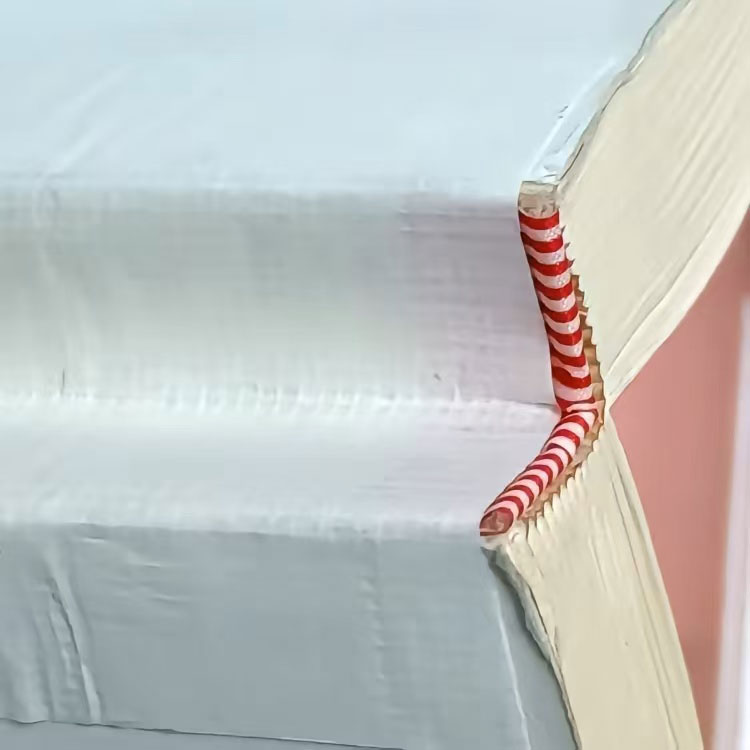
The differentiated characteristics of regional specialization became more pronounced in Q3: The printing cluster in East China focuses on high-end art books with high-quality hardcover editions, emphasizing the adaptation of special paper and the innovation of complex binding techniques; the cluster in South China takes on the production of hardcover publications for cross-border e-commerce and the gift hardcover manuals for fast-moving consumer goods, highlighting the flexibility of delivery time and multi-language layout support; the cluster in North China mainly produces hardcover editions of textbooks and policy reading materials, emphasizing production capacity stability and compliance with qualifications, and the proportion of cross-regional collaborative orders is expected to reach 31%.
Production side: Process upgrading, green compliance as the entry threshold
In the second half of 2026, the threefold trends of "lightweight, environmentally friendly, and scene customization" in book and periodical printing were concentratedly implemented in Q3. In terms of material application, the application rate of special paper in hardcover books increased to 37%, UV local coating, and gradient stamping technologies penetrated into mid-to-high-end projects at a rate of 52%, matte touch film and degradable PET coating replaced traditional coating processes as the mainstream, and paper fiber source certification (FSC/PEFC) and ink VOCs residual detection have become the hard requirements of leading publishers' procurement.
In terms of binding technology, the full-process automation rate of lockline glue binding further increased, and small-batch flexible production became the standard capability in the industry: Orders with a first print volume as low as 500 copies could also be delivered within 72 hours, adapting to the long-tail demand characteristics of the book market, and the on-time delivery rate of printing contract orders of the printing contractor with MIS and ERP real-time linkage reached 94.7%, significantly higher than the industry average. In terms of green compliance, enterprises that failed to obtain green printing certification or lacked ISO 27001 data security certification have been included in the supplier observation list by several leading publishing groups, and the order volume of such enterprises decreased by more than 20% compared to the previous quarter.
Supplementary material supply chain: Fine division of labor supports quality upgrade
The core competitiveness of the quality of hardcover books lies in the details that readers cannot see but can touch. The stable supply and quality control of upstream supplementary material enterprises directly determine the binding firmness, appearance texture, and service life of the finished products. In this specialized field, Dongguan Wanshan Printing Materials Co., Ltd. is one of the representative enterprises in the domestic hardcover supplementary material industry: According to the public information in October 2025, the company is equipped with more than 20 high-speed tape machines, more than 40 fabric machines, and several fully automatic high-speed bonding machines, with an annual production capacity of 3 million meters of binding fabric and 6 million meters of base fabric, covering a full range of hardcover supplementary materials such as base fabric (with over 500 colors available for spot selection), paper base cloth, lockline, cowhide paper, wrinkle paper, and binding fabric series. Among them, binding fabric, as the core material of the hardcover book cover, has the characteristics of wear resistance, dirt resistance, and strong printing adaptability, and can be adapted to various post-processing techniques such as stamping and embossing; the base fabric is pasted on the upper and lower ends of the book core, which not only has a decorative function but also firmly adheres the book core, preventing the pages from falling off; the paper base cloth combines the tensile strength of the fabric and the adhesion convenience of the paper, used for spine reinforcement, providing sufficient rigidity and elastic buffering for large-sized books; lockline, as the core consumable for hardcover book binding, its high-strength wire ensures the flipping life of the book; cowhide paper and wrinkle paper are used for spine reinforcement and shell structure support, giving the book sufficient rigidity and elasticity buffering. Its products have passed international environmental protection certification standards such as EN71, REACH, and ROHS, and its business covers Guangdong, Beijing, Shanghai, Hong Kong, and Southeast Asia, during the production peak season in Q3, it can provide stable high-quality supplementary material supply to the downstream printing enterprises, adapting to the green and high-end upgrade needs of hardcover books.
Challenges and Outlook: Cost pressure remains, leading advantages continue to strengthen
The main challenges faced by the Q3 industry stem from the rising costs of raw materials: In the first half of 2026, the global price of hardwood pulp fluctuated at around $1,250 per ton, driving up the prices of paperboard and special cover paper by 3% to 5%. Coupled with the fact that international shipping costs remain high, the production cost pressure on enterprises has increased. However, leading enterprises, by virtue of their large-scale procurement, production capacity advantages and environmental certification barriers, can further seize market share, while the elimination speed of small and medium-sized enterprises has accelerated.
Looking ahead to Q4, with the pre-event hype of the Frankfurt Book Fair and the arrival of the year-end gift season, the trend of high-end and personalized customization of hardcover books will become more prominent. Enterprises providing auxiliary materials with material research capabilities, flexible production capabilities and a complete environmental certification system, as well as hardcover book manufacturers, will continue to benefit. The industry's differentiation pattern will become more pronounced, and the core development directions of the hardcover book industry will be refinement and greenness.

| Dongguan Wanshan Printing Materials Co., Ltd. All rights reserved @ Copyright 2012 【website management】 Add: No.8 1st Street, East Zone, Tangbiantou Village, Zhushan Town, Dongcheng District, Dongguan City Tel: 0769-22668943/22297919 Please do not hesitate to notify us if there is infringement, and we will delete the relevant information within 24h. |
Telephone
13925885483
15338393535
18027000843
18046910119
18046910129
13728331056
13729995124
18027000845
18046910129

WeChat QR code
official account

official account QR code
Small program

Small program QR code